
Watts, S., Ovalle, D. H., Herrera, M. M. and Ollerton, J. (2012) Pollinator effectiveness of native and non-native flower visitors to an apparently generalist Andean shrub, Duranta mandonii (Verbenaceae). Plant Species Biology. 27(2), pp. 147-158. 0913-557x.
- Information
Information
Abstract:
Not all visitors to flowers are pollinators and pollinating taxa can vary greatly in their effectiveness. Using a combination of observations and experiments we compared the
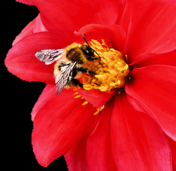
effectiveness of introduced honeybees with that of hummingbirds, native bees and moths on both the male and female components of fitness of the Andean shrub Duranta mandonii (Verbenaceae). Our results demonstrated significant variation among flower visitors in rates of visitation, pollen removal ability and contribution to fruit set. This variation was not always correlated; that is, taxa that regularly visited flowers did not remove the
most pollen or contribute to fruit set. Despite the taxonomic diversity of visitors, the main natural pollinators of this shrub are large native bees, such as Bombus spp. Introduced honeybees were found to be as effective as native bees at pollinating this species. Duranta mandonii has high apparent generalization, but low realized generalization and can be considered to be a moderate ecological generalist (a number of species of large bees provide pollination services), but a functional specialist (most pollinators belong to a single functional group). The present study has highlighted the importance of measuring efficiency components when documenting plant–pollinator interactions, and has also demonstrated that visitation rates may give little insight into the relative importance of flower visitors
Uncontrolled Keywords:
Breeding system, Duranta mandonii, flower visitation rate, pollen removal, pollinator effectiveness
Subjects:
Creators:
Watts, S., Ovalle, D. H., Herrera, M. M. and Ollerton, J.
Funders or Sponsors:
British Ecological Society, The Biodiversity Trust, The Anglo Peruvian Society, IdeaWild, The Leslie
Publisher:
The Society for the Study of Species Biology
Faculties, Divisions and Institutes:
Date:
May 2012
Date Type:
Publication
Page Range:
pp. 147-158
Journal or Publication Title:
Plant Species Biology
Volume:
27
Number:
2
Language:
English
ISSN:
0913-557x
Status:
Published / Disseminated
Refereed:
Yes
Related URLs:
 |